
The Unfinished Fight
Prescribing a therapy is just the start; too many patients with CML leave the fight unfinished due to poor adherence.1-3
Prescribing a therapy is just the start; too many patients with CML leave the fight unfinished due to poor adherence.1-3
Adherence
Many patients with CML have suboptimal adherence to TKI therapy

Patient adherence to TKI therapy continues to be a well-recognized challenge.1,2
It is important to try to continue on initial TKI therapy for better outcomes.1-3

Non-adherence (<90%) rates were similar between first generation TKI imatinib (44%; n=74/169) and second generation TKIs nilotinib or dasatinib (45%; n=27/60).2
Study Design: A real-world retrospective observational study of patients with CML (n=300 ) treated in a first-line setting with imatinib, dasatinib, or nilotinib evaluated response rates, adherence, and all-cause discontinuation in patients with CML.2 Study was performed in newly-diagnosed patients who were then followed for at least 18 months.
aNon-adherence in this study was defined as <90% adherence. Adherence was estimated as actual days of TKI therapy divided by total days of recommended therapy, converted to a percentage, using physician prescription records.2
Poor adherence has been reported to be associated with poor outcomes1
Low Adherence (≤85%)
of patients lose CCyR
High Adherence (>85%)
of patients lose CCyR
Patients with an adherence rate of >95% did not lose their CCyR (P=0.0001) after a median follow-up of 19 months
Study design: An observational cohort study measured adherence to imatinib in patients with CP-CML (n=87). Imatinib (400 mg/day) was administered in the first-line setting for a median duration of ~60 months prior to study enrollment. Adherence levels were monitored for a 3-month period using a microelectronic monitoring device attached to the imatinib prescription bottle.1
Patients with high adherence were more likely to achieve deeper molecular response3
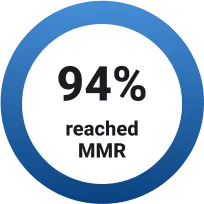
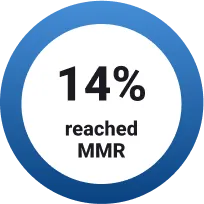
(P<0.001)
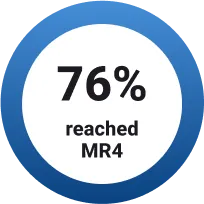
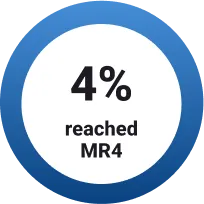
(P<0.001)
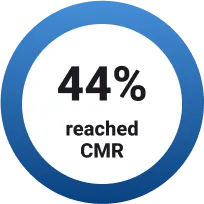
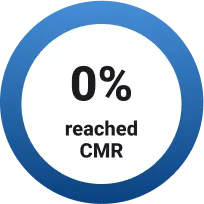
(P<0.001)
Study design: This was an observational cohort study designed to determine whether imatinib adherence correlates with degree of molecular response. This analysis included 87 patients with CP-CML who were treated with imatinib as first-line therapy for 2 or more years. All patients were in CCyR at the time of enrollment. Adherence was monitored using a microelectronic monitoring device.3
Factors affecting adherence to TKIs in patients with CML

Tasigna® is an example of a TKI that has complex food restrictions.4
Tasigna® has variable oral bioavailability, which significantly increases when taken with food.5
Variable bioavailability necessitates higher doses of Tasigna®. Taking Tasigna® in conjunction with food increases Tasigna® blood levels, thereby increasing the risk of QTc prolongation. Fasting restrictions are needed to avoid this risk.6

Tasigna® has complex food restrictions. Patients should not consume food for at least 2 hours before the dose is taken and 1 hour after the dose is taken.4
Fasting requirement with Tasigna® is considered more “difficult” than taking medications that have no food intake restrictions (such as dasatinib or imatinib).8
Patients with CML (N=303) on TKIs were surveyed using an online questionnaire; 68.6% (n=208) and 16.2% (n=49) were on imatinib and Tasigna®, respectively. Treatment difficulty was significantly higher in patients on Tasigna® than patients on imatinib (P<0.01). Significantly more patients on Tasigna® reported missing their doses than imatinib users (P<0.05) probably due to the burden of Tasigna®’s complex dosing regimen.4,8

Drug-related AEs were one of the most common reasons for intentional non-adherence to TKI therapy.10
Significantly lower adherence rates were associated with adverse events and observed in patients with asthenia, nausea, muscle cramps, and bone or joint pains.3
Importance of Staying on First-Line Treatment
Better clinical outcomes for patients who stay on initial TKI therapy
In patients receiving first-line TKIs (imatinib, dasatinib, or nilotinib) over ≥3 years of follow-up, switching rates and discontinuation rates are the highest in the first year of initiating first-line TKIs compared with the second or third year of therapy.11
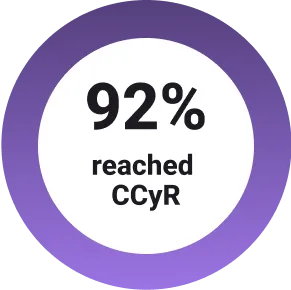
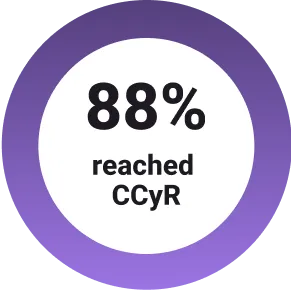
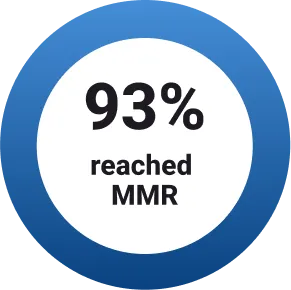
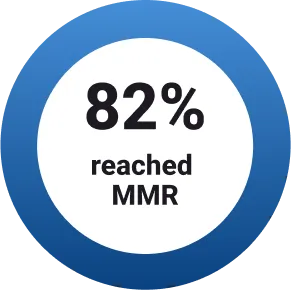
aThe documented CyR and MR testing rates differed in this population
Study design: This was an international observational study of newly diagnosed CML patients (n=370) on first-line TKIs (imatinib, dasatinib, or nilotinib) followed for ≥3 years. The primary objective of the study was to understand TKI use and management patterns in routine clinical practice and treatment-related outcomes.11
Patients who did not switch within 3 years of initiation were
than patients who switched
(OR=3.92; 95% CI: 1.14-13.46; P=0.030)
Patients who did not switch TKIs between 6 and 36 months after treatment initiation were
than patients who switched
(odds ratio[OR]= 4.07; 95% CI: 1.56‐10.57; P=0.004)
aThe documented CCyR and MMR testing rates differed in this population.
Abbreviations: CCyR=complete cytogenetic response; CML=chronic myeloid leukemia; CMR=complete metabolic response; CP=chronic phase; MR4=molecular response 4-log; MMR=major molecular response; QTc=corrected QT interval; TKI=tyrosine kinase inhibitor.
References: 1. Ibrahim AR et al. Blood. 2011;117(14):3733-3736. 2. Di Bella et al. Clin Lymphoma Myeloma Leuk. 2015;15(10):599-605. 3. Marin D et al. J Clin Oncol. 2010;28(14):2381-2388. 4. Tasigna [prescribing information]: East Hanover, NJ: Novartis Pharmaceuticals Corporation; 2024. 5. Tanaka C et al. Clin Pharmacol Ther. 2010;87(2):197-203. 6. Nilotinib risk evaluation and mitigation strategy. Accessed March 12, 2024. https://www.hematologyandoncology.net/archives/july-2011/nilotinib-risk-evaluation-and-mitigation-strategy/ 7. Boons CC et al. Eur J Haematol. 2018;101:643‐653. 8. Hirji I et al. Health Qual Life Outcomes. 2013;11:167. 9. Tan BK et al. Patient Prefer Adherence. 2017;11:1027-1034. 10. Noens L et al. Haematologica. 2014;99(3):437-447. 11. Gambacorti-Passerini C, Chen C, Davis C, et al. Eur J Haematol. 2021;106(1):82-89.